NEET Biology Important Diagrams of NCERT: Key Diagrams for NEET 2026 Preparation
 Neha Tanna2 Mar, 2026
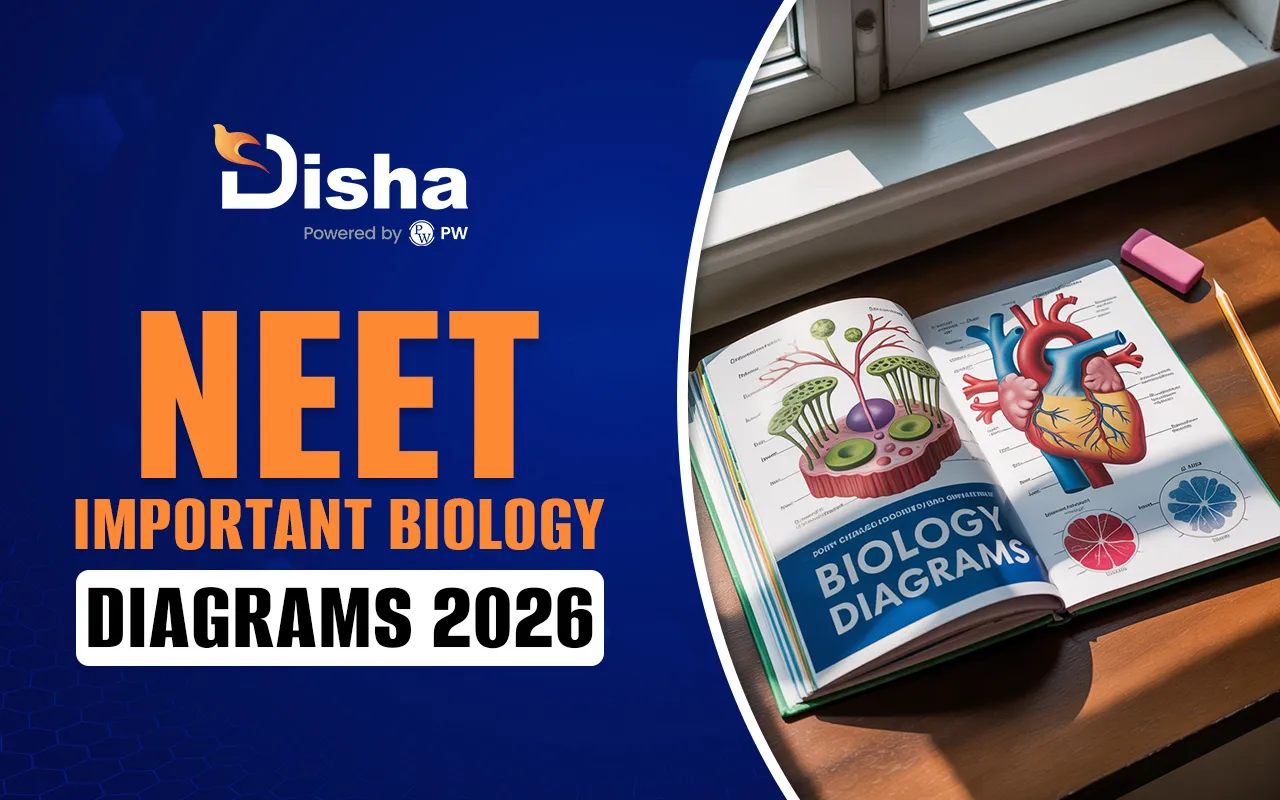
NEET Biology Important Diagrams of NCERT: When preparing for the NEET exam, many students focus heavily on theory while neglecting the importance of diagrams. However, Biology diagrams from Class 11 and 12 NCERT are essential not just for understanding concepts but also for securing easy marks. Well-labelled diagrams make it easier to memorise crucial facts, helping you excel in the exam.
Many NEET questions are based on key diagrams, such as the human heart, nephron, digestive system, flower structure, and stages of mitosis and meiosis. With consistent practice, these diagrams make complex topics more accessible, improving your Biology score for NEET 2026.
NEET Botany and Zoology Diagrams
Botany and Zoology are core sections of the NEET syllabus, and mastering their diagrams can significantly enhance your understanding. NCERT Biology diagrams for both botany and zoology are crucial for grasping essential topics and performing well in the exam. Here's a breakdown of the most important diagrams for NEET aspirants:
NEET Biology Important Diagrams For Class 11 Botany
Botany is an integral part of NEET Biology, and its diagrams make complex plant systems easier to understand. The following chapters in Class 11 Botany contain key diagrams you should focus on:
-
The Living World
-
Biological Classification
-
Plant Kingdom
-
Morphology of Flowering Plants
-
Anatomy of Flowering Plants
-
Cell: The Unit of Life
-
Cell Cycle and Cell Division
Important diagrams for Class 11 Botany include:
1. Flower Structure
The diagram shows the different parts of a flower, including the petals, sepals, male (stamens), and female (pistil) reproductive parts. It helps understand the structure of flowers and how they play a role in plant reproduction.

2. Leaf Venation
This diagram shows the patterns of veins in leaves, such as parallel and reticulate venation. It helps in understanding plant morphology and how different plants adapt to their environment.

3. Cell Organelles
This diagram displays important organelles like the nucleus, chloroplasts, and mitochondria. The nucleus controls cellular functions, while chloroplasts aid in photosynthesis, and mitochondria produce energy (ATP).
4. Mitosis
Mitosis is the process of cell division that results in two identical daughter cells. This diagram explains the phases of mitosis—prophase, metaphase, anaphase, and telophase—showing how cells replicate for growth and repair.
5. Meiosis
Meiosis involves two rounds of cell division, reducing the chromosome number by half. This diagram illustrates the steps of meiosis, which is critical for producing gametes (sperm and egg cells) and ensuring genetic diversity.

Important Diagrams For Class 11 Zoology for NEET 2026
Class 11 Zoology covers a wide range of topics, from structural organization in animals to body fluids and circulation. Here are the most critical chapters with diagrams that you need to master for NEET:
-
The Living World
-
Animal Kingdom
-
Structural Organisation in Animals
-
Breathing and Exchange of Gases
-
Digestion and Absorption
-
Body Fluids and Circulation
Key diagrams include:
1. Human Heart Structure

The diagram of the human heart shows its chambers, valves, and major blood vessels. It helps in understanding how blood circulates through the heart and the body, essential for topics related to human physiology and circulation.
2. Human Skeleton

This diagram shows different types of bones, including the long bones, flat bones, and irregular bones in the human skeleton. It aids in understanding the structure and function of the skeletal system, including bone formation and support.
3. Ball-and-Socket Joint

This diagram shows the hip joint, a classic ball-and-socket joint, which allows for a wide range of motion. Understanding joint types helps explain how animals, including humans, move efficiently.
4. Endocrine Glands and Hormones

This diagram labels the major endocrine glands (e.g., thyroid, adrenal, pituitary) and their secreted hormones. It helps in understanding the role of hormones in regulating metabolism, growth, and reproduction.
Important Diagrams For Class 12 Botany
Botany in Class 12 plays a significant role in the NEET 2026 exam. Here are the key chapters and diagrams to focus on:
-
Sexual Reproduction in Flowering Plants
-
Principles of Inheritance and Variations
-
Molecular Basis of Inheritance
-
Ecosystem
-
Biodiversity and Conservation
Important diagrams include:
1. Germination of Pollen Tube

This diagram shows how the pollen tube grows from the stigma to the ovule in the flower, facilitating fertilization. It’s important for understanding plant reproduction.
2. Mendel’s Laws of Inheritance

The diagram illustrates Mendel’s Law of Segregation, showing how alleles segregate during gamete formation, leading to inheritance patterns observed in offspring.
3. Central Dogma of Molecular Biology
This diagram demonstrates the flow of genetic information from DNA to RNA (transcription) and from RNA to protein (translation), forming the basis of how cells produce proteins.
4. Ecological Pyramid

This diagram shows the energy flow and biomass at different trophic levels in an ecosystem. It helps explain the balance of energy in food webs and the dynamics of ecosystems.
Important Diagrams For Class 12 Zoology
Class 12 Zoology diagrams may be fewer in number, but they are still significant. The following chapters have essential diagrams that can help you secure easy marks:
-
Human Reproduction
-
Evolution
-
Human Health and Disease
-
Biotechnology: Principles and Applications
Key diagrams include:
1. Female Reproductive System

This diagram shows the structure of the female reproductive system, including organs like the ovaries, fallopian tubes, and uterus. It helps understand the processes of oogenesis and fertilization.
2. Human Circulatory System

This diagram illustrates the heart and blood vessels, showing how blood circulates through the body, delivering oxygen and nutrients and removing waste products. It’s crucial for understanding human physiology.
3. Human Kidney Structure

The diagram of the kidney shows the nephron structure and the process of filtration, which is essential for understanding how kidneys regulate the body's fluid balance.
Why Biology Diagrams for NEET Are Important?
Biology diagrams are crucial for NEET preparation for several reasons:
-
Visual learning: Diagrams provide a visual representation of biological processes and systems, making them easier to understand and remember.
-
Better recall: Visual data is easier to recall than text, and well-labelled diagrams help reinforce learning.
-
Easy marks: NEET often asks direct questions based on diagrams, and mastering them can help you score easy marks.
-
Concept clarity: Diagrams simplify complex biological concepts, making them easier to grasp and retain.
By incorporating these diagrams into your daily study routine, you can increase your chances of securing a higher score in NEET 2026.